From the Stars to the Savanna: The Samburu People's Cosmic Origin Myth and Venus Descent
 |
| Image Credit: etspecies |
Did the Samburu people of Kenya actually originate from the planet Venus? While modern science looks to Mars, the Samburu (Loikop) have maintained for centuries that they descended to Earth via a divine ladder from the Morning Star. This incredible precolonial cosmology suggests that ancient Kenyans possessed advanced astronomical knowledge—or perhaps, a 'True Reality' of extraterrestrial origins that history has forgotten.
The Venus Connection: Did the Samburu "Star People" Descend from the Morning Star?
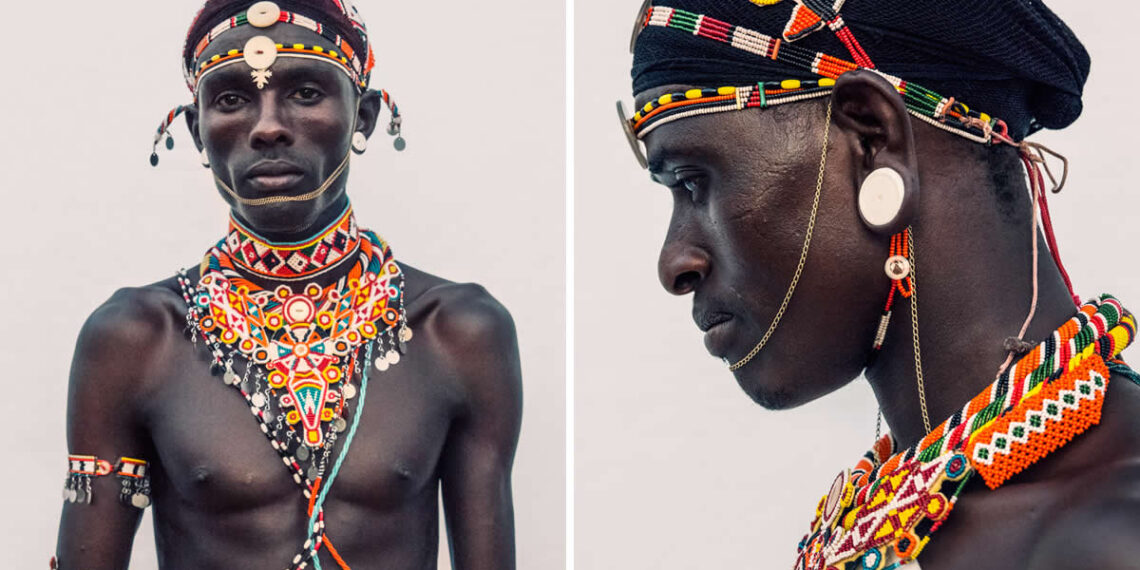
In the vast, arid expanses of northern Kenya's Samburu County—spanning roughly 8,000 square miles of bushland along the Great Rift Valley—lives a resilient pastoralist community known as the Samburu. Closely related to the Maasai (from whom they split centuries ago), the Samburu are renowned for their warrior traditions, intricate beadwork, and deep spiritual connection to the land and sky. They call themselves "Loikop," meaning "owners of the land," a title that echoes their ancient creation myth. But this isn't just a story of earthly beginnings; it's a celestial epic. According to oral traditions passed down through generations, the Samburu didn't originate on Earth at all—they descended from the planet Venus, the Morning Star, via a divine ladder crafted by their supreme deity, Nkai. This legend, blending astronomy, spirituality, and identity, offers a window into one of Africa's most intriguing precolonial cosmologies, challenging modern notions of how ancient peoples understood the universe.
The Celestial Ladder:
Nkai’s Divine Relocation from Venus to Earth
The Samburu creation myth begins in the distant past, long before recorded history or colonial influences reshaped African narratives. As told in oral lore, the Samburu were originally inhabitants of Venus, known to them as Lakira Lesiran (the Morning Star) or Lakira Leteipa (the Evening Star)—they've long recognized it as the same celestial body appearing at dawn and dusk. Nkai, the all-powerful God who governs life, death, and the cosmos, looked upon his people and decided to gift them a new home. He fashioned a "ladder" or set of steps—sometimes described as a rope or bridge in slight variations—extending from Venus down to Earth, which they call Nkop.
Invited by Nkai, the Samburu ancestors climbed down this ethereal pathway. Upon reaching the bottom, they were awestruck by the boundless savanna stretching before them: endless grasslands, acacia trees, and herds of wildlife. Nkai had prepared this world specifically for them, declaring it their inheritance. Overjoyed, they claimed it as loikop, vowing to live in harmony with the land as nomadic herders. This descent wasn't just a migration; it was a divine relocation, embedding a profound respect for the stars into their culture. Women, in particular, honor this origin by wearing star-shaped pendants on their foreheads—small, beaded symbols that gleam like Venus itself, reminding them of their heavenly roots.
Variations in the telling are subtle but meaningful. Some elders emphasize the ladder as a "rope" lowered by Nkai, while others describe it as a series of steps symbolizing life's stages. In Maasai-adjacent versions (since the two groups share ancestral ties), the story merges with broader Nilotic myths of sky origins, but the Samburu uniquely pinpoint Venus as their homeland. No cataclysm or punishment drives the narrative—it's a benevolent invitation, underscoring themes of divine favor and cosmic interconnectedness.
Elders and Star-Gazers:
Why Samburu Oral History Points to the Skies
This myth isn't confined to dusty archives; it thrives in living memory, shared around campfires, during rituals, and on social media. Elders, relatives, and modern storytellers keep it alive, often weaving it into everyday lessons.
Take Benson, a Samburu guide at Basecamp Saruni, who recounted the tale to a traveler in 2025: "Our god, Nkai, built a ladder and invited the people down to a new planet created for them: Nkop, or Earth." Benson, drawing from stories his grandparents told him under the stars, emphasized how this origin shapes their nightly sky-watching rituals. As he pointed to Venus, he added, "We came from there—it's why we listen to the stars for guidance."
In a 2024 academic review of Samburu gerontocracy, researcher S.T. Telila notes the myth's role in cosmology: "The Samburu's cosmological beliefs are rooted in their mythology, which holds that they originated from the planet Venus and were given a 'ladder' by God to descend to Earth." Telila, citing interviews with elders, highlights how grandparents pass this to grandchildren as a bedtime story, reinforcing identity as "the owners of the earth."
Social media echoes these familial transmissions. A Facebook post from a Samburu cosmology group shares: "Samburus have always known that Venus is the evening star...they also know that it is the same star that it's the last star to extinguish itself... Lakira Lesiran. Lakira Leteipa." The poster, likely drawing from relatives' teachings, adds personal flair: "Our ancestors came down from there—my grandmother told me we still wear the stars to remember." Another Paukwa Stories post on Facebook invites reflection: "Or the Samburu belief in a descent from the planet Venus, the Morning Star, through a ladder and down to Earth, a place where Nkai had created for them?" Commenters chime in with second-hand accounts: "My uncle, an elder in Maralal, says his father saw Venus in dreams as our true home—it's why we bless brides under the stars."
Nina Müller, who lived with the Samburu for a year in the early 2020s, recalls in her travel blog: "On my first day in Samburu country, elders shared stories of the stars over tea. One grandmother explained our pendants: 'We came from Venus—Nkai lowered us here.' It was passed from her mother, a reminder during droughts to look up for hope." Aileen Barrameda, in a Medium article about her trek with the Samburu, notes: "Our guide shared the Venus origin while we walked—it's from his family's oral history, tying into their age-set rites where stars guide transitions."
The Lesepen lineage of astrologer-priests, like the legendary Shujaa Mpunyati Lesepen, embodies this tradition. Family members still interpret star messages, as noted in cultural archives: "Grandchildren learn from elders how Venus signals rain or migrations—it's our cosmic heritage."
Ancient Astronauts in Kenya?
The Precision of Samburu Planetary Knowledge
What elevates this myth from folklore to fascination is its astronomical precision. How did a pre-telescopic nomadic people identify Venus as a planet (not a star) and recognize its dual appearances? Modern ufologists and ancient-astronaut theorists speculate it hints at extraterrestrial contact—perhaps "visitors" from Venus (or symbolizing it) imparted knowledge. The ladder evokes biblical or global descent myths, but the specific planetary reference is unique, predating European science.
In tourism, Samburu star-gazing safaris bring it alive: Guides point to constellations, explaining bridal processions mimicking Orion as a nod to their stellar journey. Pendants aren't just jewelry—they're artifacts of interstellar identity.
The Loikop Legacy:
Why the Venus Myth is the Key to Kenya's True Reality
The Venus descent myth underscores the Samburu's resilience amid climate change and modernization. It fosters environmental stewardship (as "owners of the land") and cultural pride, with women’s pendants symbolizing empowerment. As global interest in African astronomy grows, this story challenges stereotypes, proving indigenous knowledge rivals Western science.
Visit Samburu lands, gaze at Venus at dawn, and feel the connection. It's a reminder: We all might be star-born.
References & Further Reading
- - Paukwa Stories: “Samburu Myth of Creation: From Venus to Earth” (full legend, cultural details).
- - AFAR Magazine: “Dark Skies and Wild Nights” (Benson's testimonial).
- - Academic Journals: “Review of the Samburu” by S.T. Telila (cosmological roots).
- - Facebook Groups: Samburu Cosmology posts (community shares).
- - Enchanting Travels Blog: “My Year With The Samburu” by Nina Müller (immersion stories).
- - Medium: “Walking with the Samburu” by Aileen Barrameda (guide accounts).
 |
| Image Creadit: 121Clicks |
🔭 What’s Your True Reality?
The story of the Loikop reminds us that Kenya’s history isn't just written in the soil, but in the stars. Do you believe the Samburu's ancestors were gifted survivors of a cosmic journey, or is there a scientific explanation for their advanced knowledge of Venus?
Tell us in the comments: Have you heard similar "Star People" stories from other communities in East Africa? We are documenting these truths one story at a time.
Next Investigation:
Stay grounded, but keep looking up, The True Reality Team
#Samburu #Venus #StarPeople #KenyanHistory #AncientAliens #TrueRealityKenya
#KenyaUFO #UFO #AlienSightings #History #TrueReality


Comments
Post a Comment