The Kilimanjaro Cigar: Captain Bicknell’s 1951 Encounter with a Giant Metallic Craft

On the morning of February 19, 1951, Captain Jack Bicknell of East African Airways was piloting a Lodestar aircraft near the snow-capped peak of Mount Kilimanjaro when he encountered the impossible. For nearly twenty minutes, a massive, metallic cigar-shaped craft hovered in the thin mountain air—witnessed not just by the crew, but by passengers and ground observers. This is the 'True Reality' of the 1951 Kilimanjaro Incident, a case so credible it was documented in official aviation records.
The Kilimanjaro Cigar:
Captain Bicknell’s 1951 Encounter with a Giant Metallic Craft
An East African Airways Lockheed Lodestar, bound for Mombasa, took off from Nairobi West Airport at 7:00 a.m. with Captain Jack Bicknell at the controls, Radio Officer Dennis W. Merrifield, and nine passengers aboard. What unfolded over the next half-hour would become one of the most detailed, multi-witness UFO reports in African history—and one of the few from the early 1950s to earn "Unknown" status in official U.S. Air Force files.
This case stands out for its credibility: trained aviators, multiple independent observers, binoculars, radio reports in real time, attempted photography, and signed affidavits. It occurred just four years after Kenneth Arnold's famous "flying saucers" sighting sparked global interest, yet it unfolded far from the American media frenzy—in the airspace above the majestic, snow-capped Mount Kilimanjaro.

Flight VP-KDA:
A Morning Patrol into the Unknown
At 7:20 a.m., as the Lodestar cruised toward Tanganyika (now Tanzania), Radio Officer Merrifield spotted something unusual. He turned to Captain Bicknell and said calmly: "Have a look at a flying saucer." Bicknell's initial reaction was skepticism—he stayed silent for three minutes while the two men watched a bright, star-like object hovering motionless about 10,000 feet above the 19,341-foot summit of Kilimanjaro. The plane was roughly 50 miles from the mountain when they alerted the passengers. One passenger produced a powerful pair of navy binoculars and began studying the object. Merrifield radioed a description to Eastleigh air traffic control near Nairobi. Control jokingly asked if they had been drinking, then suggested checking for a meteorological balloon. Bicknell took the binoculars himself and examined it for several minutes.The "Flying Cigar":
200 Feet of Gleaming, Featureless Metal
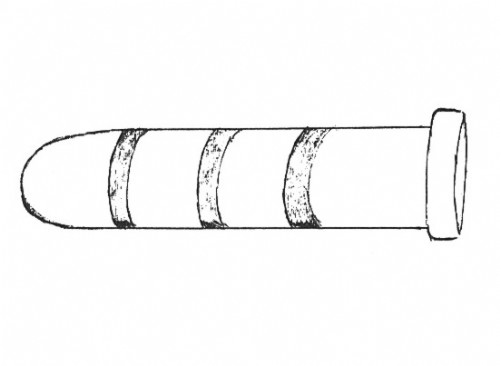 |
| Drawing of Cigar-shaped UFO over Mt. Kilimanjaro witnessed by pilot and passengers.(credit: NICAP / Hall) |
The group watched in astonishment for a full 17 minutes. Then, suddenly, the object rose vertically in two distinct "jumps" or steps, climbing to an estimated 40,000 feet before accelerating eastward at tremendous speed—over 1,000 mph by some estimates—covering about 60 miles in roughly three minutes. There was no sound, no exhaust, no sonic boom. It simply vanished into the distance.
Beyond the Cockpit:
Corroborating Evidence from Passengers and Ground Crew
Captain Bicknell, a seasoned pilot, gave a detailed account to the Nairobi Sunday Post (February 25, 1951):"It was absolutely stationary, and remained that way for 17 minutes... Through the glasses, I saw a metallic, bullet shaped object which must have been over 200 feet long... There was no apparent propelling power when the saucer moved... definitely no vapor trail."
He later described it as "500 years ahead of its time" in interviews. Merrifield corroborated the initial spotting and radio exchange. Passengers provided consistent details. British passenger H.B. Fussell described a "huge bullet, whitish-silver" with vertical dark bands. American merchant marine radio officer Ray Overstreet (from the freighter Robin Mowbray) thought he saw a row of portholes and helped attempt photography. Three photography efforts were made:
- One camera missed entirely.
- Another captured only a small black speck.
- Overstreet shot 30 feet of color movie film, which reportedly showed the object but has never been publicly analyzed or released (its whereabouts remain unknown).
Upon landing in Mombasa, Bicknell sketched the object and prepared an affidavit. All nine passengers and the crew signed it, attesting to the details. The U.S. Consulate in Dar es Salaam forwarded a report to Washington, and the case reached Project Blue Book (U.S. Air Force), where it was classified "Unknown" due to insufficient data for explanation.
The Eye-Opening Modern Twist:
Defying 1950s Physics and Skepticism
This sighting occurred in an era when "flying saucers" were often dismissed as balloons, meteors, or hoaxes. Yet explanations fell short here:- No known aircraft or balloon could hover motionless at altitude then accelerate hypersonically without trail or sound.
- The stepped vertical ascent and right-angle-like departure suggested controlled, anti-gravity-like propulsion.
- Multiple trained observers, binoculars, radio logs, and affidavits made debunking difficult.
The case appeared in NICAP's The UFO Evidence (1964), Loren Gross's UFOs: A History 1951, and ufology archives like Patrick Gross's site. A 2015 issue of UFO Historical Revue revisited potential photographic evidence, though nothing conclusive surfaced. Some speculate the object monitored volcanic/geothermal activity at Kilimanjaro or used the mountain as a landmark/reference point.
In Kenya's context, it marks one of the earliest documented UFO events tied to local airspace—preceding modern Rift Valley sightings and echoing ancient sky myths.
More Credible shared evidence:
- http://www.greenwoodufoarchive.com/uhr/uhr16.pdf
- https://www.cia.gov/readingroom/docs/CIA-RDP79B00752A000300130001-1.pdf
- https://ufologie.patrickgross.org/htm/kilimandjaro1951.htm
The Scientific Verdict:
Why Pilot-Witnessed Cases Define the "True Reality"
The Kilimanjaro encounter reminds us that extraordinary phenomena aren't confined to the American West or European skies. It happened over Africa's iconic landmark, witnessed by everyday travelers and pilots, and documented meticulously in an age before smartphones or radar ubiquity. It challenges us to ask: Were visitors already here in the 1950s, observing a continent on the cusp of independence? Today, as Kenya's skies see increasing reports, this 1951 case stands as a benchmark—credible, multi-witness, and still unexplained.References & Further Reading
- Patrick Gross ufologie: “February 19, 1951, Mount Kilimanjaro, Africa” (detailed timeline, quotes, affidavit sketch).
- Nairobi Sunday Post (February 25, 1951) excerpts via archives.
- NICAP The UFO Evidence (1964) – Section on foreign reports.
- Loren Gross UFOs: A History 1951 (comprehensive narrative).
- CIA declassified docs and Project Blue Book "Unknown" listing references.
- https://nation.africa/kenya/life-and-style/dn2/ufo-sightings-not-adequate-proof-of-life-in-outer-space-1015562.
✈️ A Legacy in the Skies
The Kilimanjaro sighting remains one of the most credible cases in African history because it was reported by a trained observer who knew exactly what a "normal" aircraft looked like.
What do you think? Could a 200-foot metallic craft in 1951 be a secret human technology, or was Captain Bicknell witnessing something from beyond our world?
Share your thoughts below. If you have family stories of pilots or elders seeing "Sky Boats" near the mountains, we want to hear them!
Next Case File:
Eyes on the horizon, The True Reality Team
#Kilimanjaro #UFO1951 #AviationMysteries #KenyaHistory #TrueReality


Comments
Post a Comment